
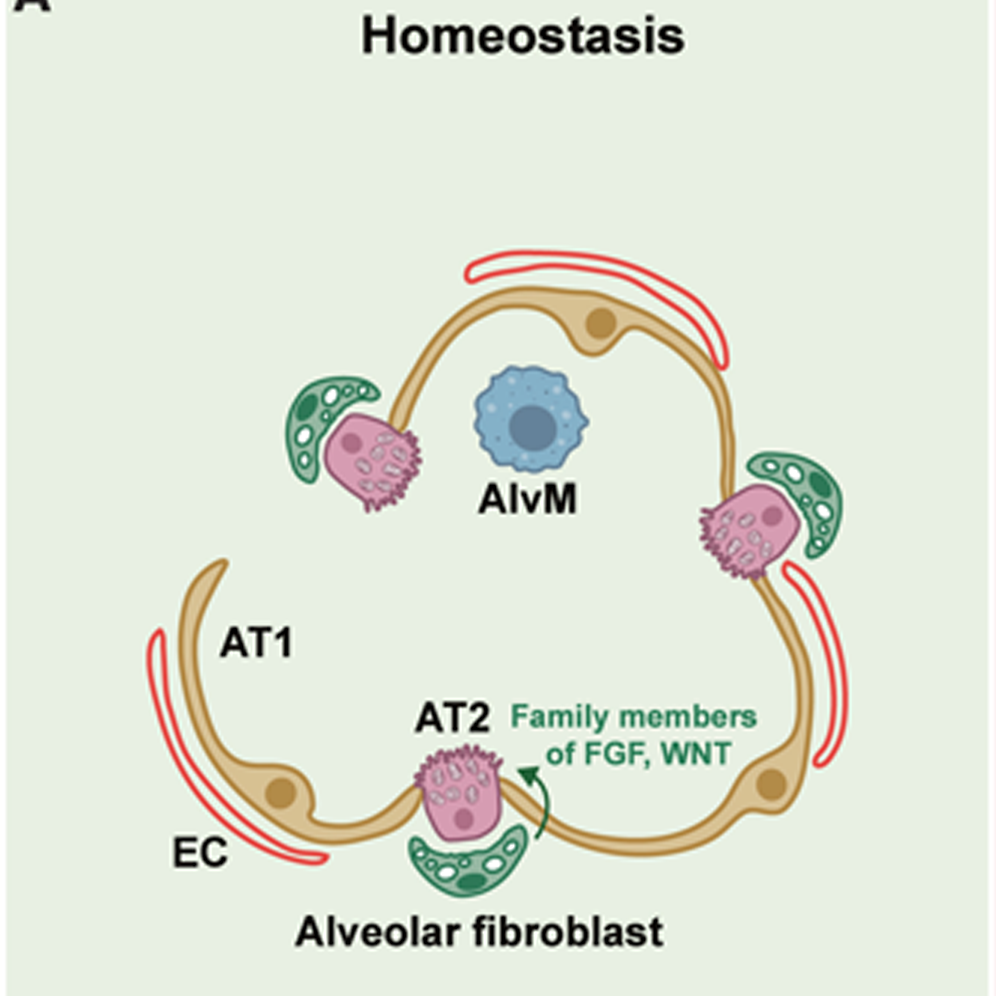
Tissue regeneration: Unraveling strategies for resolving pathological fibrosis
Tissues are constantly exposed to stresses that cause both cellular and structural damage. In response, a coordinated healing process restores tissue integrity and functionality. When these stresses persist or the healing process becomes dysregulated, progressive tissue fibrosis can emerge. This condition is characterized by excessive scarring, disrupted tissue architecture, and loss of organ function. In this review, we explore the relationship between regeneration and fibrosis, with a focus on the lung and liver. We dissect cellular contributions and interplay among fibroblasts, epithelial progenitors, immune components, and vasculature in both regenerative and fibrotic responses to tissue injury. We also examine therapeutic strategies under development that navigate the complexities of immune mediators, fibrogenic myofibroblasts, and excess extracellular matrix (ECM) with small-molecule targeting and various cell-based approaches. By elucidating regulatory networks controlling regeneration and fibrosis, we aim to inform the development of targeted strategies to alleviate or reverse fibrosis, ultimately supporting long-term tissue health.
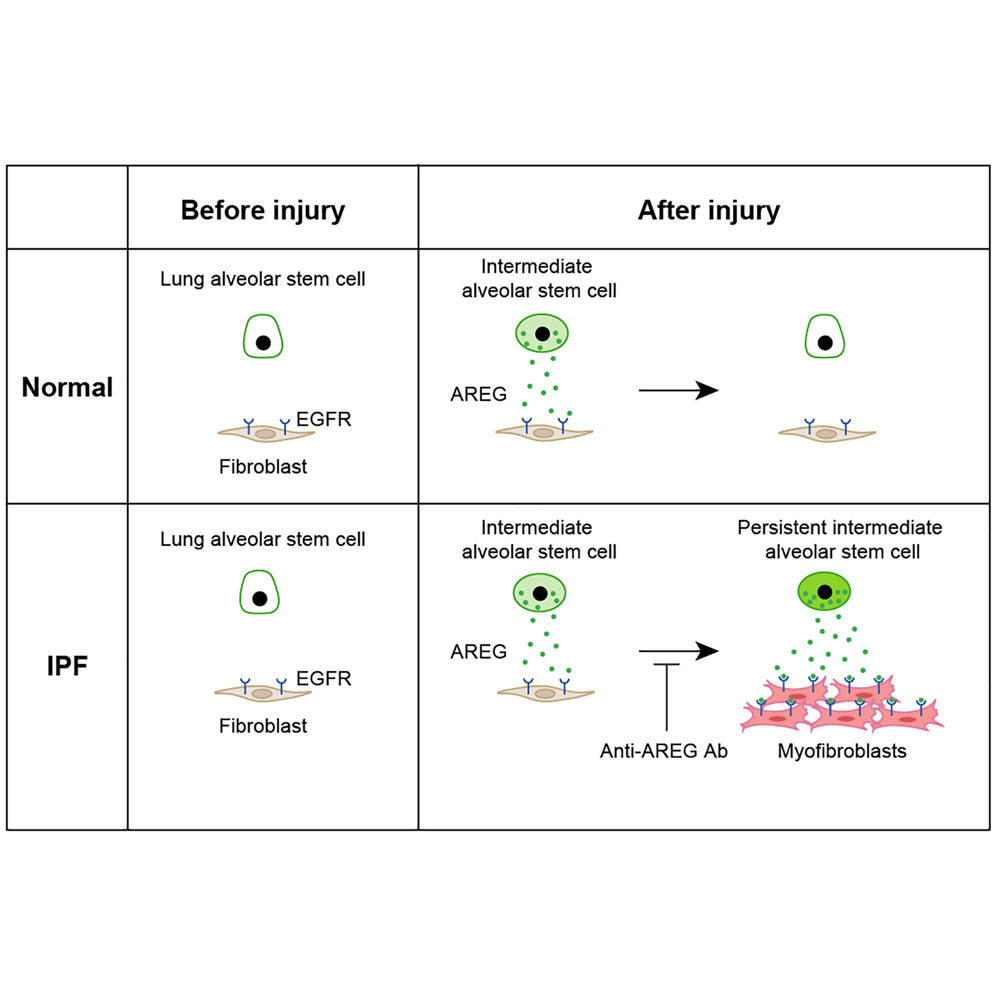
Sustained amphiregulin expression in intermediate alveolar stem cells drives progressive fibrosis
Rui Zhao, Zheng Wang, Guowu Wang, Jing Geng, Huijuan Wu, Ximing Liu, Ennan Bin, Jianhua Sui, Huaping Dai, Nan Tang
Tang and colleagues elucidated the profibrotic role of sustained amphiregulin (AREG) derived from intermediate lung stem cells in driving pulmonary fibrosis and established AREG as a potential disease-severity indicator for idiopathic pulmonary fibrosis. Pharmacological inhibition of AREG may serve as a new therapeutic strategy for treating fibrotic diseases.
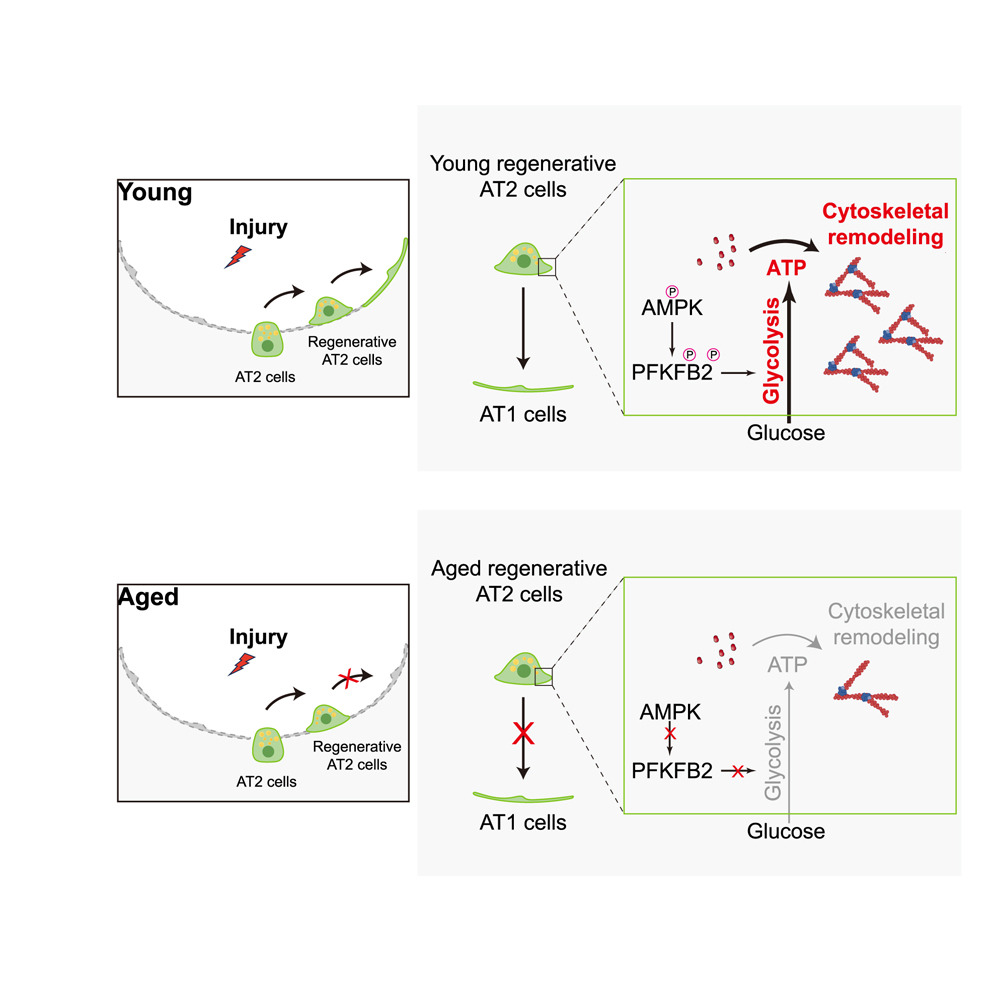
Enhanced glycolysis-mediated energy production in alveolar stem cells is required for alveolar regeneration
Zheng Wang, Dongdong Wei, Ennan Bin, Jiao Li, Kewu Jiang, Tingting Lv, Xiaoxu Mao, Fengchao Wang, Huaping Dai, Nan Tang
Tang and colleagues elucidate the mechanisms governing alveolar regeneration and the impact of aging on post-injury alveolar regeneration, highlighting that cellular energy metabolism is orchestrated with stem cell differentiation during alveolar regeneration. Their findings suggest therapeutic potential for aging-related lung diseases through targeted modulation of stem cell energy metabolism.
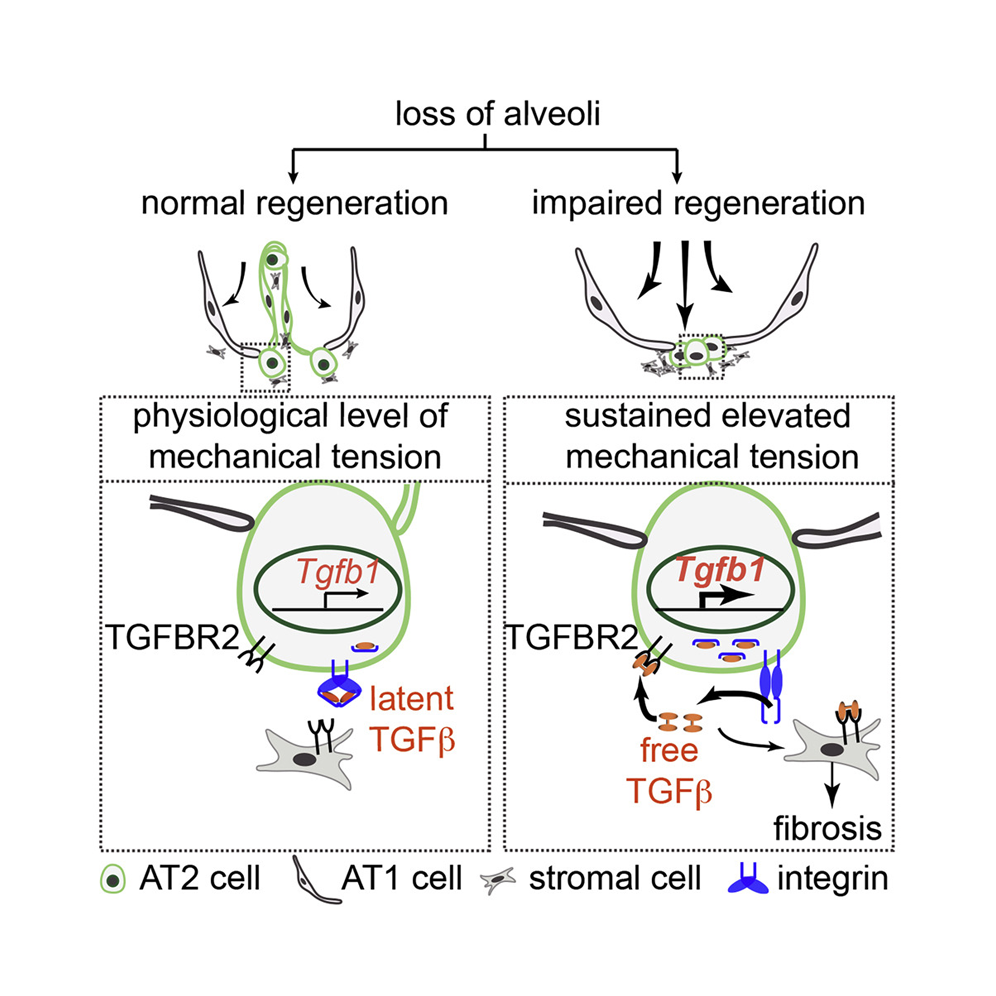
Progressive Pulmonary Fibrosis Is Caused by Elevated Mechanical Tension on Alveolar Stem Cells
Huijuan Wu, Yuanyuan Yu, Huanwei Huang, Yucheng Hu, Siling Fu, Zheng Wang, Mengting Shi, Xi Zhao, Jie Yuan, Jiao Li, Xueyi Yang, Ennan Bin, Dong Wei, Hongbin Zhang, Jin Zhang, Chun Yang, Tao Cai, Huaping Dai, Jingyu Chen, Nan Tang